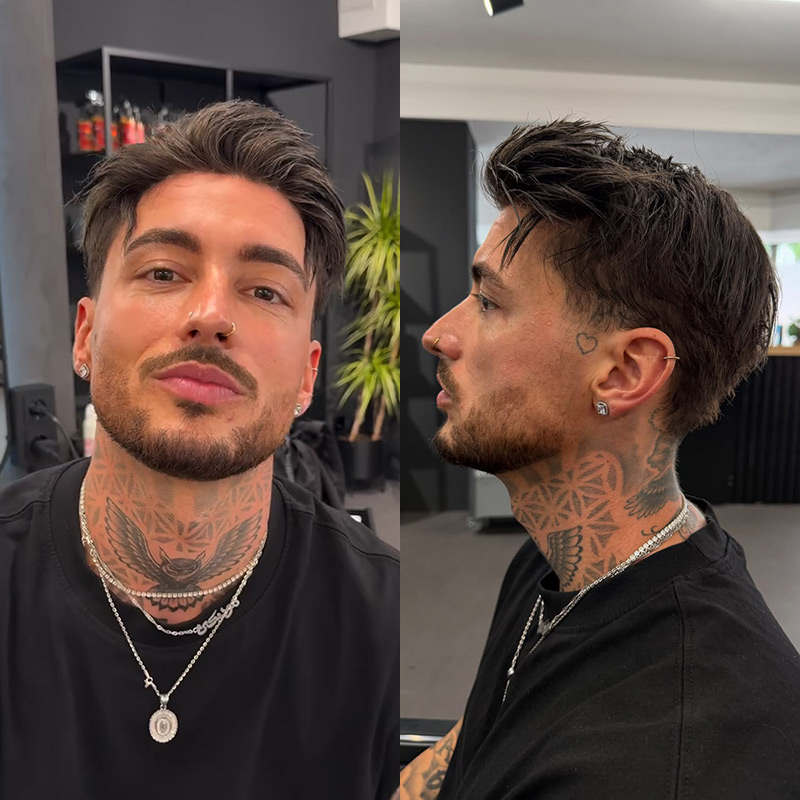
Traveling with a hair system? You don’t need to pack your entire bathroom or stress about maintenance the whole trip. A few essentials, a simple five-minute routine, and you’re good to go from the airport straight to dinner without any drama.
Quick Answer
Check your bond before you leave, pack a minimal travel kit, refresh at the hotel, check your hairline before heading out. That’s really it. You don’t need a full maintenance setup for most trips.
Quick Takeaways
Airport: Quick bond check, toss essentials in your bag
Hotel: Five-minute refresh — detangle, check for lifting, restyle
Dinner: Smooth stray hairs, check the hairline under indoor lighting
Backup: Pack for touch-ups, not a full reinstall
What Should You Check Before Heading to the Airport?
Before you leave home, take a few minutes. This saves you from dealing with problems at the airport when you’re already rushing. Check three things:
Bond security — Front and perimeter holding? Good. If anything’s lifting, fix it now. Don’t assume it’ll hold through the flight.
Hair condition — Detangle gently, style as usual. You want it looking decent when you land, not like you just rolled out of bed.
Your kit — Maintenance supplies in one small pouch, easy to grab. Don’t scatter them across different bags.
A few minutes now saves you from airport bathroom emergencies or dealing with issues mid-flight when you can’t do much about them anyway.
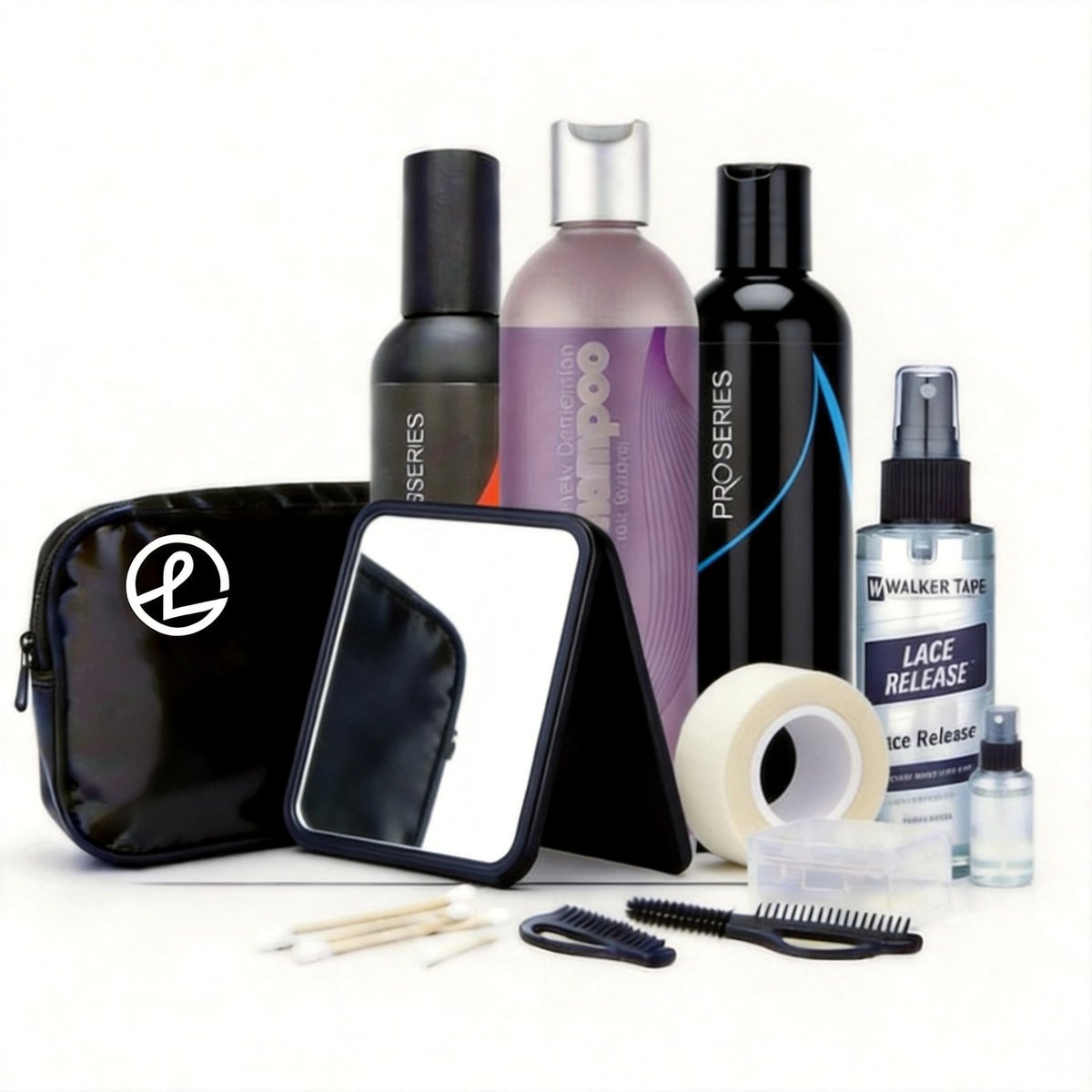
What Actually Goes in a Hair System Travel Kit?
You’re not packing your whole bathroom. Just the stuff you’ll actually use. Keep it minimal.
Customize it to your hair. If tangles aren’t really your thing, the conditioner can probably stay home. Bond holding up well? That backup adhesive might not even come out of your bag. Skip packing stuff ”just in case” when you’ve never actually needed it before. Heads up on liquids and adhesives though — check what your airline and airport allow before you pack. Keep everything labeled and stick to the rules for your specific route. Connecting through different airports? Each one might have different limits, so don’t assume they’re all the same.
What Do You Do Once You Hit the Hotel?
Your hair’s probably going to look a bit flat after the flight, maybe feel tangled. Completely normal. Give yourself five minutes to sort it out before you head anywhere. It doesn’t need to look perfect right away.
Check the base — Loose edges? Signs of lifting? Address any issues now.
Detangle gently — Start at the ends, work upward. Don’t pull or you’ll cause more problems.
Refresh your style with a small amount of whatever you normally use — you don’t need to go heavy on product. If your scalp’s sweaty from the flight, clean it up following whatever routine works for you. Messy hair doesn’t mean you’re doing a full reinstall. If the bond’s still holding, a quick refresh handles most of it. Now if the base is actually lifting, deal with that before you go out. Better to fix it now than stress about it during dinner.
How Do You Get Dinner-Ready Without a Full Reinstall?
You’ve had a long day and you’re running on empty. A full maintenance session is the last thing you need. Instead, just do a few quick things:
Reset your part — Smooth out any stray hairs.
Check the hairline — Look for residue or lifting under indoor lighting. Bathroom lighting is usually good for this.
Use less product — Too much makes hair look heavy or greasy. You want natural, not stiff.
Final check — Base feels comfortable and secure? You’re good to go.
Goal: look polished without turning a quick refresh into a full maintenance session. You’re going to dinner, not doing a full reinstall.
What If Something Goes Wrong During the Trip?
Travel plans change. Your hair’s condition might too. Know what to do so you’re not scrambling when something happens.
Problem
Quick fix
Flat or messy hair
Detangle gently, restyle
Dry or tangled ends
Small amount of leave-in product
Sweat or residue
Follow your usual cleaning routine
Slightly lifted edge
Check the bond, use compatible products
Significant lifting
Don’t pull. Arrange proper maintenance
Longer trip? Pack enough supplies for your expected wear period, plus backup for minor issues. Weekend away? You probably don’t need a full installation kit. Keep it realistic.
The easiest routine is one you can repeat without thinking. Before you leave, check your system. Pack products that work with your base and adhesive. At the hotel, focus on detangling and restyling. Save the bigger maintenance for when you’ve got time and space. You don’t need to prepare for every possible scenario. Bring what you use regularly, plus enough backup for minor issues. Don’t overpack or stress about edge cases you’ll probably never encounter.
Gym sessions, swimming and summer days can be a big part of your weekly routine. But that doesn’t mean you have to sacrifice your hair system! A few simple pre and post activity habits can keep your bond undisturbed, your hair looking great and make upkeep easier.
Quick Answer
You can work out, swim, and get on with your day without much fuss. Just make sure your bond is secure, avoid unnecessary friction, and rinse off sweat or water residue afterward.
Quick Takeaways
Before: Check your bond, prepare your essentials
During: Avoid excess rubbing, pulling and friction
After: Rinse away residue, gently dry and check your bond
What Should You Do Before a Workout or Swim?
A little prep goes a long way, especially when your day includes a workout or a swim.
Check the edges. Make sure everything is secure before heading out.
Let the adhesive set. Give it enough time before working up a sweat or getting in the water.
Keep styling simple. Go with a style that stays put, so you’re not constantly adjusting it.
Pack your aftercare essentials. Keep a towel and suitable care products handy for after your workout or swim.
If your bond is already lifting, fix it before getting in the water. Swimming can make it worse.
Looking for a system suited to swimming? Explore our waterproof men’s hair systems for swimming to learn more about options designed for water activities. A secure bond and proper aftercare are still essential.
How Should You Wear a Hair System During a Workout?
A few things to keep in mind when you work out:
Try not to touch the hairline. Sweat and oil from your fingers can affect the bond.
Blot away sweat. Pat with a clean towel instead of rubbing your hair.
Watch your headwear. Hats and headbands can rub against the base, so take them off gently.
Cool down first. Give yourself a few minutes to catch your breath before moving on.
A breathable base can make wearing a hair system more comfortable in hot weather. But airflow alone won’t keep the bond in place. Application, adhesive choice, and proper care all play a part. Follow the manufacturer’s instructions for your system.
Chlorine can leave your hair dry and frizzy, while salt water can cause dryness and tangles. Frequent swimming also means more upkeep.
Swimming condition
What to keep in mind
Chlorinated pools
Rinse the hair after swimming to remove chemical residue
Salt water
Rinse thoroughly to remove salt and reduce dryness
Long swimming sessions
Extended water exposure can put more strain on the attachment
Frequent swimming
Keep up with regular bond checks and scheduled maintenance
Before you swim, make sure your bond is secure and your adhesive is suitable for water. A strong hold doesn’t always mean waterproof, so check the manufacturer’s instructions.
In the water, avoid pulling or tugging at your system. If it shifts or an edge starts lifting, get out and take care of the bond before getting back in.
Don’t rush to style your hair just yet. A few simple steps can help prevent buildup, protect your bond, and keep frizz under control.
Rinse after swimming. Use fresh water to wash away chlorine or salt.
Pat dry gently. Skip the rough rubbing. It can cause tangles and friction.
Check your bond. Look for lifting edges without pulling on the base.
Clean as directed. Follow your system’s care instructions. Scrubbing too hard can affect the bond.
Handle loose edges properly. Don’t just add more adhesive. Follow the manufacturer’s instructions for lifted areas.
Listen to your scalp. If it feels itchy, irritated, or uncomfortable, don’t apply more adhesive over the area. Clean it properly and seek professional advice if the problem persists.
How Can You Keep Your Hair System Ready for the Next Active Day?
Good maintenance isn’t about checking your system every five minutes. It’s about a simple routine and dealing with small issues before they get worse.
At the end of the day:
Wash away sweat and residue. Use products suited to your system.
Detangle gently. No rough brushing or unnecessary pulling.
Stay on top of maintenance. Replace your adhesive as needed, following its instructions and your usual schedule.
Let your system dry completely. Don’t leave the base damp after cleaning.
Keep essentials on hand. That way, you’re ready when maintenance is due.
Working out regularly doesn’t have to mean spending hours on upkeep. Stick to a routine, and your system will be ready for whatever comes next.
Ready to See the Active-life Guide?
From gym sessions to swimming and summer travel, your hair system should fit into your day without turning every activity into a project. Explore LaVivid Lifestyle Hair Systems for options that fit your routine.
Start with your lifestyle and measurements before choosing a hair system. A professional phone consultation with LaVivid can help you narrow down the right options and avoid unnecessary trial and error.
Quick Takeaways
Lifestyle drives base choice.
Accurate measurements prevent fit issues.
Your first system is a learning tool — expect to refine.
A prepared consultation beats solo guessing.
What Should You Decide Before Choosing a Hair System?
Most beginners start by browsing hairstyles — but your daily routine should drive the decision. A system that looks great in photos may fail in practice if it doesn’t match how you actually live.
Which Factors Should Drive Your First Hair System Choice?
Key decision factors for your first hair system
Decision Factor
Key Question
What It Affects
Daily activity level
Do you exercise or work outdoors?
Base type, attachment method, breathability
Maintenance willingness
How much time per week can you spend on care?
Base material, adhesive choice, replacement cycle
Styling preference
Do you want wash-and-go or full styling control?
Hair type, density, cap construction
Coverage area
Do you need partial or full coverage?
Base size, custom vs. stock option
The best first hair system is not the one with the most features — it’s the one that fits your real routine with the least friction.
How Does Base Type Affect Your Lifestyle?
Here’s a quick reference on how base type maps to lifestyle:
Base Type
Best For
Trade-off
Full lace (French/Swiss)
Active lifestyle, hot climate, all-day breathability
Shorter lifespan (~3–4 months); knots may need bleaching
Skin / poly
Maximum realism, undetectable hairline
Less airflow; may feel warm in summer
Hybrid (lace + poly)
Balanced realism and breathability
Slightly heavier than full lace
Find the right balance of density, base, and style with LaVivid’s all-men hair systems — designed for a natural look that fits your lifestyle.
What to Measure for a Hair System Before Ordering?
Measurements directly affect fit, comfort, and how natural the result looks. Getting them wrong leads to lifting edges, pressure points, or visible gaps.
Which Measurements Matter Most?
Measurement
How to Measure
Why It Matters
Front to back
From the front hairline to the back of the loss area
Determines base length and coverage
Ear to ear (over top)
Across the crown from one temple to the other
Determines base width
Head circumference
Around the full head at the hairline
Confirms overall fit and tension
Loss area shape
Trace the boundary of thinning or bare areas
Helps choose between standard and custom sizes
Understanding what to measure for a hair system before ordering gives you a stronger starting point and reduces unnecessary adjustments later.
If possible, have a professional take measurements during a video consultation — even small errors of 5mm can affect how the base sits.
What Should You Expect From Your First Hair System?
Your first system is a learning tool, not a final answer. The typical journey looks like this:
Week 1–2 → Adjustment.
Getting used to the feeling, learning attachment and removal.
Week 2–4 → Styling.
Finding the right cut-in shape, testing your daily routine.
Month 2–3 → Refinement.
You’ll start noticing what to change — density, base type, hair length.
Month 3+ → Confidence.
Clear preferences formed; your next order becomes much more targeted.
How Long Does It Take to Get Used to a Hair System?
Don’t expect perfection on day one. Here’s what most first-time wearers report in practice:
Attachment time: 15–30 min per session initially; drops to under 10 min after a few weeks of practice.
Comfort adjustment: Most people stop noticing the system after 3–5 days. Initial awareness of weight or warmth is normal and fades quickly.
First maintenance cycle: Plan for a full removal, clean, and reattach within 2–4 weeks depending on adhesive type and activity level. Tape lasts 3–6 weeks; liquid adhesive typically 2–4 weeks.
The first system is data collection — it tells you what density, base, and length actually work for your daily life, not just what looks good in photos.
How Should You Prepare for a First Hair System Consultation?
A first hair system consultation becomes far more productive when you bring the right information.
Your first system does not need to be perfect. It needs to give you a realistic starting point and help you understand what works for your appearance, lifestyle, and routine.
If your priority is an undetectable appearance, focus on realism. If you wear a system during workouts or warmer weather, breathability becomes more important. If you want fewer touch-ups, choose based on maintenance requirements.
The best choice depends on how you actually wear your hair system every day.
Quick Takeaways
Realism focuses on how natural the hairline, density, and movement appear.
Breathability affects comfort, heat management, and long-term wearing experience.
Maintenance determines cleaning frequency, attachment routine, and overall effort.
There is no single “best” hair system — only the best match for your priorities.
Hair System Realism vs Breathability: What’s the Actual Difference?
Not every system can be the most natural-looking and the most breathable. The base material decides both:
Comparison of base types by realism and breathability
Base Type
Realism
Breathability
Thin skin (0.03–0.06 mm)
Highest — mimics scalp
Lowest — minimal airflow
French/Swiss lace
Moderate — knots visible in bright light
Highest — open weave
Hybrid (skin front + lace top)
High at hairline
Moderate — balanced
Skin bases with 80–90% frontal density deliver the most undetectable hairline — poly material resembles scalp. Hand-tied lace gives more natural hair movement but shows small knots under direct light.
Breathability is how much air passes through the base. French lace moves roughly 40–60% more air than solid poly — significant for anyone exercising 4–5 times per week or wearing in climates above 30°C.
Breathability priorities, benefits, and tradeoffs
Priority
Benefit
Tradeoff
Full lace
Less heat, less sweat
Replaces every 3–4 months
Hybrid
Skin front blocks wind; lace top breathes
Two materials = more complex care
Full skin
Flat, scalp-like frontal
Traps 2–3× more heat
Lace keeps scalp 2–3°C cooler than skin under direct sunlight, but heavy sweat degrades lace faster — replacement every 3–4 months versus 5–7 months for poly.
How to Compare Hair System Maintenance Across Base Types
A hair system maintenance comparison should go beyond cleaning frequency. It covers removal, adhesive management, washing, and reattachment:
Maintenance comparison between skin base and lace base systems
Maintenance Factor
Skin Base (tape)
Lace Base (adhesive)
Removal cycle
Every 3–6 weeks
Every 2–4 weeks
Cleaning time per session
15–20 min
30–45 min
Reattachment difficulty
Moderate — thin material tears easily
Lower — lace is more forgiving
The tradeoff: skin systems look better but need more delicate cleaning. Lace systems are simpler to clean but need more frequent hairline touch-ups. Those 45-minute lace sessions every 2 weeks add up to roughly 2–3 hours monthly.
How Do You Rank Your Top Priority?
When figuring out how to compare hair systems, start by ranking based on actual daily wear:
Realism, breathability, and maintenance solve different problems. A realistic system helps you look natural. A breathable system improves comfort. A manageable system makes daily wear easier. The best choice is the one that matches your routine, expectations, and wearing habits.
Before buying, answer these five questions honestly:
How many hours will you wear it daily?
How often do you sweat heavily?
How much maintenance time per month can you accept?
How critical is an invisible frontal hairline?
Do you prefer longer wear or simpler cleaning?
Your answers will point you to the right base type — and away from specs that look good on paper but don’t match your routine.
Ready to Find the Right Hair System for Your Lifestyle?
Not always — price depends on hair origin, base construction, and density, not realism alone.
Can I switch base types later?
Yes. Many start with skin for realism, then move to hybrid or lace once comfortable with care routines.
How long does a hair system typically last? 3–5 months on average — lace wears faster (2–3 months), skin lasts longer (3–5 months).
Can I sleep, swim, or exercise with a hair system? Yes. For swimming and heavy sweat, use waterproof adhesive or tape rated for moisture.
What’s the difference between lace and skin base? Lace breathes better and suits active lifestyles; skin sits flatter for the most undetectable hairline.
How often should I clean my hair system? Every 1–2 weeks for regular wear; weekly if you exercise often or live in a hot climate.
Will people be able to tell I’m wearing a hair system? Not if the base and density match well — skin fronts with 80–90% density are nearly undetectable.
Confidence with a hair system rarely happens overnight. For many wearers, it develops as repeated steps become familiar and they learn which signals deserve attention. If the routine still feels mentally crowded, that is normal; most people need more than one maintenance cycle to understand what works. Take your time. The goal is not to get everything right today, but to build a routine you can repeat.
Quick Answer
Long-term wearers usually gain confidence by making the routine more observable, not more complicated. They notice how the system feels, how the hair responds to styling and washing, how activity or climate changes care needs, and which steps take more time than expected. That knowledge makes future decisions more specific. If you are not sure what to change, start with one variable and keep the rest of your routine stable long enough to compare. A practical routine follows the product directions, responds to repeated signals, and leaves room to pause when the scalp or system needs attention.
Quick Takeaways
Your first system gives you useful information, not a final answer.
A repeatable review rhythm matters more than copying someone else’s schedule.
Lifestyle changes can alter what comfort, styling, and maintenance mean for you.
Change one part of the routine at a time so you can tell what helped.
Confidence grows when you know what to check and when to ask for help.
What Does Your First Hair System Teach You?
Research can explain base types, density, color, styling, and care. Wearing a system adds a different kind of knowledge: you learn which details matter in your own week.
Your first system may show you how much styling you enjoy, how often you want professional support, which conditions make the routine less predictable, and what kind of finished look feels like you. That does not make the first choice a mistake. It gives you a clearer basis for the next choice.
At first
With experience
Trying to remember every step
Recognizing the few steps that need close attention
Following a general schedule
Adjusting within the product guidance when repeat signals appear
Changing several things after one difficult day
Looking for a pattern before changing one variable
Asking what works for everyone
Knowing which trade-offs fit your own routine
Many wearers find that the most useful shift is from asking, “Am I doing everything right?” to asking, “What changed, and what does this setup need now?”
How Does a Hair System Routine Become More Predictable?
A routine becomes more predictable when you review it at consistent moments. This does not require one universal removal or cleaning schedule. Exact timing depends on the system, the products used, your activity level, your scalp, and the instructions that come with the products.
Review point
What to check
What it helps you learn
During normal styling
Comfort, tangling, dryness, movement, and the time the style takes
Whether the daily routine still feels manageable
After unusual heat, sweat, or water exposure
Moisture, edge movement, residue, hair feel, and scalp comfort
Whether the environment changed what the setup needs
At each full maintenance cycle
Scalp condition, base condition, cleanup effort, and any repeat problem
Whether the current process is still working consistently
After a lifestyle or hairstyle change
Time available, activity level, styling effort, and comfort priorities
Whether the routine should be simplified or adjusted
Use this as a review rhythm, not a fixed maintenance calendar. For detailed cleaning and care steps, use LaVivid’s hair system maintenance guide and follow the directions for your specific system and care products.
How Should Your Lifestyle Shape Long-Term Wear?
Your hair system has to work in the life you actually live. Exercise, swimming, climate, travel, work, privacy, and styling preferences can change which parts of the routine deserve more attention.
Lifestyle factor
What to observe over time
Possible next question
Frequent exercise
Comfort, moisture, movement, and recovery after activity
Does the current routine remain stable across several workouts?
Warm or humid weather
Scalp comfort, residue, and how often you need to check the perimeter
Do you need more frequent checks without changing the whole setup?
Regular swimming
Hair feel, dryness, movement, and post-swim care needs
Are you following the guidance for water exposure and your products?
A new hairstyle
Daily styling time, blend, and how much handling the look requires
Is the style worth the extra work it asks of you?
A busier schedule
Missed steps, rushed care, and recurring inconvenience
Would a simpler style or more professional support fit better?
There is an honest trade-off here. A setup that gives you more styling control may ask for more daily handling. A stronger hold may make removal and cleanup more involved. A simpler routine may reduce flexibility. The right balance is the one you can maintain calmly and consistently.
Do not use this article to choose a swimming setup, build a travel kit, or replace a complete care protocol. Use the dedicated guidance for those situations and the directions for the exact products in your routine.
When Is It Time to Reconsider Your Routine?
One difficult day is not always a reason to replace the system or rebuild the entire routine. Repeated signals are more useful than isolated frustration.
Reconsider one part of the setup when you notice:
the same lifting, movement, residue, tangling, or styling problem across several cycles;
the routine regularly takes more time than you can give it;
a lifestyle change has made the old schedule unrealistic;
the base or hair shows visible wear that normal care no longer improves;
the finished style no longer matches what you want from the system.
Pause rather than push through persistent redness, burning, broken skin, painful pulling, or a damaged base. Stop using the relevant product and seek qualified help when a skin reaction is significant or does not settle. Discomfort is not a maintenance milestone you need to tolerate.
How Can You Make Changes Without Creating More Uncertainty?
Change one variable at a time. Keep a short note of what changed, when you changed it, and what happened over the next few normal wear and maintenance cycles. That may mean changing the styling approach, asking for a different cut, reviewing the care process, or getting professional help with a step that keeps causing trouble.
This approach is slower than changing everything at once, but it gives you better information. Most wearers need a few attempts before placement, styling, and maintenance feel familiar. Your routine is personal and private; no one else needs to see the learning process unless you choose to involve them.
If you are still building the basics, LaVivid’s hair systems for beginners guide can help you organize the decisions around base, color, density, lifestyle, and support before you change your setup.
How Does Routine Turn Into Confidence?
Confidence is not the absence of maintenance. It is knowing what normal looks like for your system, what deserves attention, and what can wait until the next planned review.
Over time, the questions become more specific. Instead of wondering whether every small change means something is wrong, you can compare it with your own pattern. You know which steps you can handle, where professional support is useful, and which compromises are acceptable for your lifestyle.
That is the long-term value of a stable routine. The system takes up less mental space because you have a process for looking after it. You are free to focus on the rest of your day.
FAQ
How long does it take for a hair system routine to feel familiar?
There is no fixed timeline. Familiarity usually develops over several normal wear and maintenance cycles as you repeat the same steps, notice patterns, and make small adjustments. Give yourself time to learn without treating every imperfect attempt as failure.
How often should I maintain my hair system?
There is no universal schedule. Follow the directions for your system and care products, then consider activity level, scalp condition, climate, residue, movement, and how the hair and base are responding. Repeated signals matter more than copying another wearer’s calendar.
Should I change my whole routine when one thing stops working?
Usually not. Start with one variable, keep the rest stable, and observe the result across a few normal cycles. Changing several products, steps, or timing decisions at once makes it harder to tell what helped.
Can my routine change as I become more experienced?
Yes. Your hairstyle, activity level, climate, schedule, comfort priorities, and willingness to handle maintenance may all change. A useful routine should evolve when repeated evidence shows that the old setup no longer fits your life.
When should I ask for professional help?
Ask for help when you have persistent scalp irritation, painful pulling, repeated movement or lifting you cannot resolve, visible base damage, or uncertainty about whether a product or process is suitable for your system. A stylist, supplier, or qualified health professional can help with the part that falls within their expertise.
Build a Routine You Can Repeat
You do not need to solve every future maintenance question today. Start with a clear first-system framework, keep your routine observable, and make one thoughtful change at a time.
Choosing your first hair system means making several unfamiliar choices at once. Many first-time wearers worry that there is one correct combination they must find before they can move forward. That is normal. In our experience, the process becomes clearer when you treat base, color, density, and length as four connected decisions rather than four separate boxes on a product page.
Start with the hairstyle and daily routine you actually want. Then compare the trade-offs one decision at a time. Take your time: your first choice does not have to solve every future preference, and there is no need to choose a system today.
Quick Answer
To choose your first hair system, begin with the finished hairstyle and daily routine you want, then decide on base, color, density, and length as one connected set. Base shapes comfort, handling, and front-edge options. Color should blend with clean side and back hair in indirect daylight. Density should relate to that surrounding hair and the intended style, not a universal percentage. Length is working material for the cut-in, not the promised finished cut. If you are not sure, gather daylight photos and one realistic style reference before comparing systems. There is no need to choose every specification today.
Quick Takeaways
Choose a base for your priorities and intended hairstyle, not because one material is labeled best for beginners.
Match color and gray to the hair that will remain around the system, using consistent daylight references.
Choose density for a balanced transition into your side and back hair; do not rely on one percentage for everyone.
Treat ordered length as room for the cut-in and blend, then confirm the actual specification on the product page.
How Do Base, Color, Density, and Length Work Together?
The four decisions influence one another. A base can support a certain front look or handling routine, but color and density determine whether the added hair continues naturally into your own. Length gives a stylist working room, but it still has to suit the finished shape, texture, and blend.
Decision
Start with
Check it against
What may be difficult to correct later
Base
Comfort, airflow, handling, and how much of the front you want to show
Hairstyle, routine, and the construction available in the exact system
The base construction is built into the system
Color
Your clean side and back hair in indirect daylight
Gray, mixed tones, lighting, and the color options on the product page
Color corrections can be limited and may change the hair
Density
The visible fullness of your side and back hair
Color contrast, hairstyle, base construction, and the amount of scalp you want to see
More hair cannot normally be added during a cut-in; reducing fullness requires care
Length
The finished cut you want
Curl or wave, direction, crown shape, and room needed for blending
Hair can be cut shorter, but removed length cannot be restored
This is why the fullest, longest, or most technically delicate option is not automatically the most natural choice. The goal is a combination that fits your appearance, routine, and long-term comfort with the process.
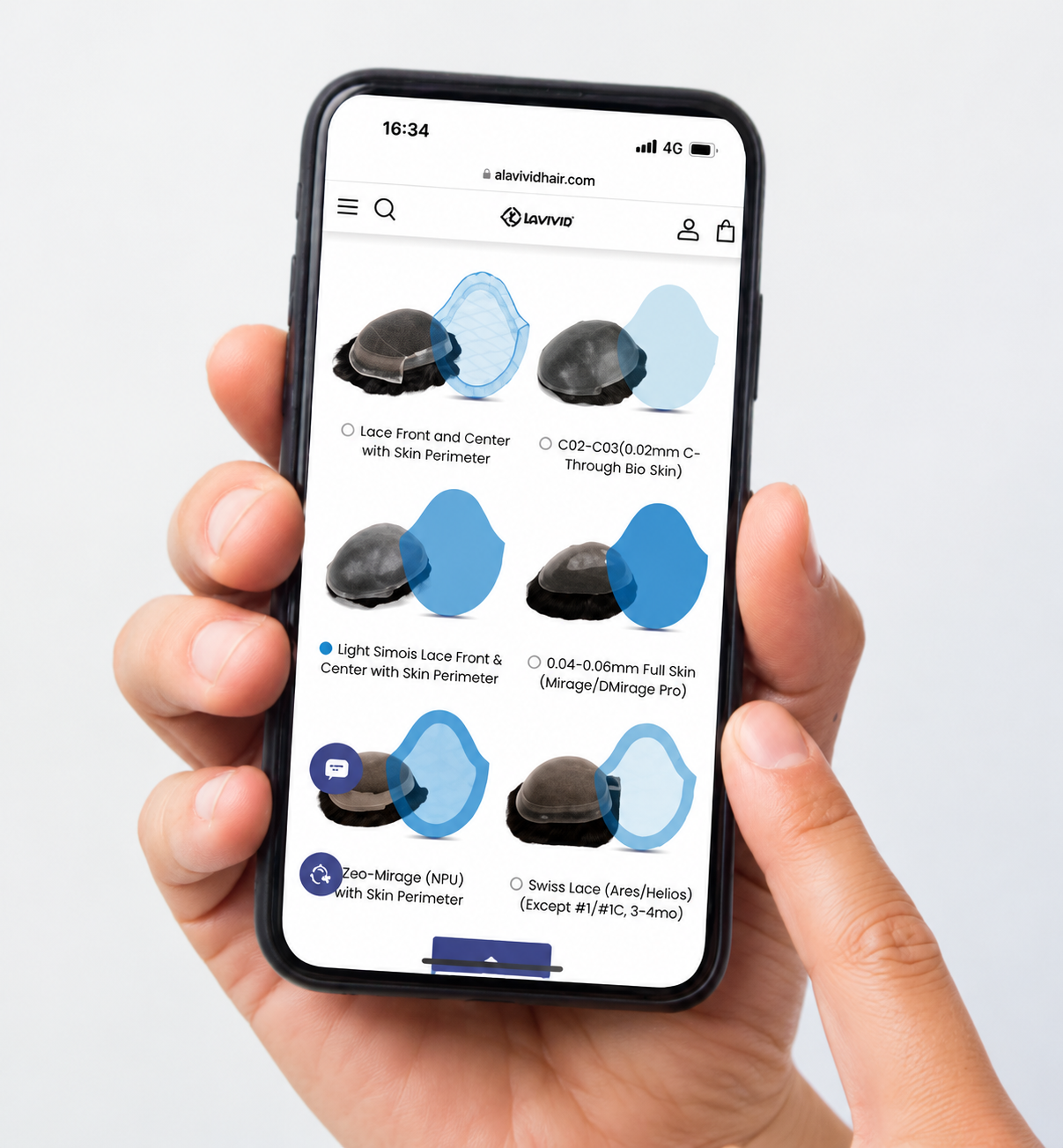
1. Which Base Fits Your Priorities?
The base is the foundation that holds the hair and sits against the scalp. It affects how the system feels, how the front can look, how much airflow it allows, and how carefully it needs to be handled. There is no universal beginner base. Each construction comes with trade-offs.
Base family
A reason to consider it
A reason to compare carefully
Lace
Airflow, a light feel, or a front that may be worn with less coverage
Fine lace can require gentler handling, and construction varies by model
Skin or poly
A continuous surface and a scalp-like appearance in the covered area
It may feel warmer than an open lace construction, and thickness affects the result
Mono
More structure in the main wearing area
The front construction may matter if you want to expose the hairline
Hybrid
Different materials can serve different zones
You need to understand which material is used at the front, center, and perimeter
A base direction may fit when its strengths match the way you plan to wear and care for the system. Recheck the choice when it comes only from a product photo or a general claim that one base is easier for every beginner.
If the front will be visible, look closely at the front construction rather than the base name alone. If airflow is a high priority, compare how open the main area is. If you prefer more structure, compare mono or hybrid options without assuming that added structure is always better.
Color matching starts with the hair that will remain visible around the system. For many wearers, that means the side and back hair. The top area you want to cover is not the useful reference if little or no hair remains there.
Use a consistent comparison:
Check clean, dry hair in indirect daylight, without a color filter.
Take clear views of both sides and the back; include the roots and ends if they differ.
Record visible gray or mixed tones instead of matching only the darkest strands.
Compare those references with the color choices for the exact system you are considering.
Remember that screens and indoor lighting can shift how a shade appears.
A color direction may fit when it looks like a continuation of your surrounding hair in more than one light. Recheck it when the choice comes only from a model photo, a color name such as black or brown, or one image taken under warm indoor lighting.
Gray is part of the match, not an afterthought. A shade may be close in depth but still look disconnected if the amount or distribution of gray is very different. Mixed tones can also affect how full the system appears, which means color should be reviewed before density is finalized.
3. What Density Should a First-Time Wearer Choose?
Hair system density describes how full the added hair appears. It is not the same as native-hair density, and a percentage is not a universal translation between every brand, base, or product family. That is why there is no single beginner density that works for everyone.
Begin with the visual fullness of the hair that will remain at the sides and back. Then consider:
whether the finished style will sit close to the head or use more volume;
whether the hairline or scalp will be visible;
how strongly the chosen color contrasts with the scalp;
whether curl, wave, strand thickness, or direction changes the apparent fullness; and
what density options the exact base and product actually support.
A density direction may fit when the transition from the system into your own hair looks intentional from the front, sides, and back. Recheck it when the main reason is simply wanting as much hair as possible, copying someone else’s percentage, or using age as the only rule.
For a first-time decision, ask for a comparison between the closest realistic options rather than a promise that one percentage is safest. If a product page uses labels such as light, medium, or medium-light, verify what those labels mean for that specific product before treating them as interchangeable.
4. What Hair System Length Works for Your First Cut?
The listed hair length is usually working material for the cut-in, not a picture of the finished hairstyle. A stylist may need room to shape the crown, connect the top to the side and back hair, and create the final outline. That does not make one listed length the default for every beginner.
Choose length by working backward from the intended cut:
Save a reference that shows the front, top, sides, and back when possible.
Identify the longest part of the finished style, not only the front fringe.
Allow for the way curl or wave changes apparent length.
Consider how much material is needed to blend the crown and sides.
Confirm the stock length, texture, and direction offered on the exact product page.
A length direction may fit when it gives enough room for the planned cut without forcing a very different shape. Recheck it when the listed length is being treated as the exact finished cut or when a universal number has replaced a real hairstyle plan.
When in doubt, show the intended style and the product specification to the person doing the cut-in before ordering. A little planning matters because length can be removed, but it cannot be added back after the cut.
Which Decision Should You Make First?
Use this order so that each choice has a clear reference:
Define the finished hairstyle and the routine you are comfortable maintaining.
Choose the base family that best supports those priorities.
Match color and gray to clean side and back hair in consistent daylight.
Choose density for a balanced transition into that surrounding hair.
Confirm enough working length for the intended cut, texture, direction, and blend.
The hairstyle and routine are not extra product specifications. They are the reference that keeps the four decisions connected.
For example, an exposed front makes the front construction more important. A short, close shape can make a color or density mismatch more visible. A longer or more textured style may need additional working length, but it still has to connect with the hair around the system. Changing one part should prompt a quick check of the other three.
What Should You Do If You Are Still Unsure?
You do not need to turn uncertainty into a guess. Build a small decision file before comparing products:
one realistic hairstyle reference that feels like you;
clear, unfiltered daylight photos of both sides and the back;
a note about gray, curl or wave, and the current fullness around the system area;
your top two routine priorities, such as airflow, front appearance, or more structure; and
the exact product specifications you want a stylist or support specialist to confirm.
Ask for two plausible directions and the trade-off between them. That is more useful than asking for the single best beginner system without context. Your first choice can also teach you what you want to adjust over time. You can keep that process private, involve a stylist, or ask for brand support on your own terms.
FAQ
What should I choose first when selecting a hair system?
First define the finished hairstyle and routine you want. Then choose the base, because its construction is built into the system and affects the options you evaluate next. Color, density, and length should all be checked against the same hairstyle plan and your side and back hair.
Is there one best hair system base for beginners?
No. Lace, skin or poly, mono, and hybrid bases balance airflow, front appearance, structure, and handling differently. The better starting point is the base that fits your priorities and intended style, not a universal beginner label.
What density should a first-time hair system wearer choose?
There is no universal percentage. Compare the visual fullness of your side and back hair, the intended style, color contrast, base construction, and the density options available for the exact product. Choose for a balanced transition rather than maximum fullness.
Is a six-inch hair system always best for beginners?
No. A listed length is working material for the cut-in, and the amount you need depends on the finished style, texture, direction, crown, and blend. Check the actual product specification and confirm the plan with the person doing the cut before ordering.
Can base, color, density, or length be changed after purchase?
The base construction is built in. Length can be cut shorter but not restored. Color and density changes may be limited, product-specific, and difficult to reverse. Confirm all four decisions before ordering rather than assuming they can be corrected later.
Ready to Compare the Beginner Steps?
Use the full beginner process to organize your questions before you compare products or make a decision.
Thinking about a first hair system can bring up more questions than expected. That mix of curiosity and hesitation is normal: you are considering a visible change, a new care routine, and something personal. The useful goal is not to eliminate every concern, but to separate what deserves a practical check from what can be given time.
Quick Answer
First-time hair system concerns usually fall into two groups. Check the issues that can affect fit, comfort, and whether the care routine works with your week. Give yourself more time with worries about whether a new look feels familiar or whether you already know every step. In our experience, a clear plan matters more than complete certainty. If you are not sure where to start, begin with beginner guidance, write down your three biggest questions, and decide where professional support would make the process easier. Take your time; there is no need to make a product decision today.
Quick Takeaways
Check the fit, finished style, comfort, and care commitment before you begin.
Decide which parts you want to handle yourself and where support would help.
Treat persistent discomfort or visible scalp irritation as a reason to pause.
Give a new look time to feel familiar without forcing yourself to accept a poor fit.
You do not need to learn the whole process before taking one low-commitment step.
Which Five Concerns Should You Check or Give More Time?
The five concerns below do not all need the same response. Three can be turned into practical checks before you start. Two usually become clearer through time and experience.
Concern
What it needs
A useful next step
Is my first-fit plan specific enough?
Check now
Bring a familiar hairstyle reference and agree on the fit, color, density, texture, and final cut you want help with.
Can the care routine fit my actual week?
Check now
List the tasks you expect to handle and decide where professional support may be useful.
Do I know when to pause?
Check now
Learn which fit problems or scalp reactions should not be treated as normal adjustment.
Must the finished look feel familiar immediately?
Give it time
Separate ordinary unfamiliarity from a result or fit that is clearly wrong.
Do I need to understand every step before I begin?
Give it time
Start with one guide and three personal questions instead of a long product comparison.
Which Three Concerns Deserve a Practical Check?
1. Is My First-Fit Plan Specific Enough?
A first system is easier to evaluate when the intended result is clear. A product photo alone cannot define how the finished style should work with your existing hair, face, routine, and preferences.
Before a fitting or cut-in, collect one or two hairstyle references that already feel like you. Be ready to discuss the overall length, color, density, texture, hairline preference, and how much styling you are willing to do. You are not trying to make every technical choice alone. You are giving a stylist or support specialist a clearer picture of the result you want.
A professional cut-in can be useful for a first system because the final blend and shape affect how the whole result feels. It is support, not a requirement. If you prefer to do more yourself, decide in advance which steps you are comfortable handling and which ones you would rather learn with help.
2. Can the Care Routine Fit My Actual Week?
A hair system can offer more control over your appearance, but the trade-off is an ongoing care routine. That routine may include washing, styling, scalp care, regular upkeep, and occasional professional support. The exact schedule depends on the system, your setup, your lifestyle, and the guidance that comes with the products you use.
Do not judge the routine by whether someone else calls it simple. Judge it by whether it fits your own week. Ask how much time you are willing to set aside, what you want to learn yourself, and who you can contact when a step is unclear. A routine that you can maintain calmly over time matters more than a dramatic first-day result.
3. Do I Know When to Pause?
Some first-time uncertainty is visual or practical. Pain and ongoing skin irritation are different. Do not treat worsening discomfort, persistent itching, burning, visible redness, blistering, open or damaged skin, or a fit that pulls painfully as something you must push through.
Pause and ask for qualified help when:
discomfort becomes painful, continues, or gets worse;
the scalp remains itchy, red, burning, blistered, or damaged;
the fit pulls, shifts, or feels uneven and you cannot correct it safely;
the finished result is materially different from the fit or style you agreed on; or
the care steps remain unclear enough that the routine no longer feels manageable.
Pausing gives you room to identify the cause, correct the fit or plan, or decide that the current approach is not right for you.
Which Two Concerns Usually Need More Time, Not More Research?
4. Must the Finished Look Feel Familiar Immediately?
Not necessarily. A planned change in hairstyle or density may look unfamiliar simply because you have not seen yourself that way before. That does not automatically mean the result is wrong.
Use a calmer distinction:
Unfamiliar: the fit is comfortable and the result follows the plan, but your reflection still feels new.
Wrong: the fit is poor, the result clearly misses the agreed plan, or you have persistent discomfort or irritation.
A first fitting is a starting point, not a permanent verdict. Small refinements can be discussed after you understand what feels unfamiliar and what genuinely needs correction. There is no need to force an immediate judgment.
5. Do I Need to Understand Every Step Before I Begin?
No. Trying to master selection, fitting, care, styling, and every future situation at once can turn useful research into more uncertainty. You only need enough information for the next decision in front of you.
If you are not sure where to start, begin with one low-commitment step: read the beginner guide and write down the three questions that matter most to your routine. Those questions might be about the finished style, the care commitment, comfort, privacy, or where you want professional help.
This is your decision and your routine. You choose who, if anyone, needs to know while you research or wear a system. Take the process at your own pace.
What Should You Actually Check Before Your First Wear?
Use this short checklist before moving from research to a first fitting or wear plan:
I can describe the result I want without relying on one product photo.
I understand that appearance control comes with regular care.
I know which steps I want to handle and where I may want support.
I know the signs that mean I should pause rather than push through.
I have written down my three most important questions for the next conversation.
You do not need complete certainty. You need a clear enough next step and permission to slow down when something does not feel right.
FAQ
Is it normal to feel unsure before wearing a hair system for the first time?
Yes. You are considering a visible change, a new routine, and a personal decision. Curiosity and hesitation can exist at the same time, and neither means you have to decide immediately.
What should a first-time wearer check before getting started?
Check whether the intended fit and style are clear, whether the care routine is realistic for your week, where you may want professional support, and which comfort or scalp signs mean you should pause.
Does the first result need to feel familiar right away?
No. A comfortable result that follows the agreed plan can still look unfamiliar at first. Give yourself time to separate a new reflection from a fit or result that genuinely needs correction.
What should I do if the fit or my scalp does not feel right?
Pause. Ask for qualified help if the fit pulls, shifts, or cannot be corrected safely. Stop using the relevant scalp product and seek appropriate medical help for a significant or persistent skin reaction.
Do I need to understand every part of hair system care before I start?
No. Begin with the basic process and the three questions that matter most to your routine. You can learn later steps when they become relevant instead of trying to master everything at once.
Want a Clearer First Step?
Learn the first-system process at your own pace before you compare products or make a decision.
A natural-looking hair system is a coordinated result. Hairline, density, color, and base can each work alone and still conflict with each other. If that sounds like a lot to judge, that is normal. Many first-time wearers focus on one detail instead of asking whether all four support the same hairstyle.
Quick Answer
No single feature decides whether a hair system looks natural. The hairline establishes the front transition, density controls fullness, color connects the top with the sides and back, and the base affects how the system sits and directs the hair. Start with the area your everyday style exposes most, then check how the other three support it. An exposed front prioritizes hairline and front density; a covered front relies more on fullness and color; visible side hair makes the blend the main reference. Find the clearest mismatch first and change one variable at a time.
Quick Takeaways
A strong hairline cannot carry a density, color, or fit mismatch.
Density should agree with the visible side and back hair, not a universal number.
Color needs to hold together in natural and indoor light.
The base must support the intended coverage, direction, and shape.
Start with the part your normal hairstyle exposes most.
Why Can One Strong Feature Still Look Out of Place?
People see the full outline before they inspect a specification. A refined front may still draw attention if the top is much fuller than the temples. A close color may still separate if the base changes the contour or direction. The trade-off is that more fullness may support volume but complicate the side transition, while a finer front may ask for more careful handling. The goal is coordination, not maximum settings.
How Do Hairline, Density, Color, and Base Work Together?
Part of the system
Main visual job
What it must coordinate with
Reconsider when
Hairline
Set the front position, outline, transition, and direction
Front density, base edge, color, and style
The front attracts attention before the hairstyle does
Density
Control fullness and the change from top to sides
Side and back hair, front transition, base, and cut
The top reads as a separate block of volume
Color
Connect the system with visible hair in ordinary light
Undertone, gray mix, density, texture, and lighting
The join appears indoors or near a window
Base
Support coverage, contour, parting, and hair direction
Hairline, density capacity, planned style, and fit
Buckling, shape, or direction breaks the overall outline
Which Part Should You Inspect First?
Use your everyday hairstyle, not a studio close-up, to set the order:
Everyday look
Start with
Check next
Front clearly exposed
Hairline transition and front density
Color, base contour, and direction
Hair worn forward or over the front
Overall density and color
Base shape, movement, and the front underneath
Strong side and back hair remains visible
Color and density at the join
Hairline, base contour, and cut
Little reference hair remains
Balanced hairline position and overall shape
Density, color, direction, and styling
If you are not sure, begin with the row that best matches how you actually wear your hair. One universal starting point would ignore those different views.
Why Is Density the Useful Bridge Between the Other Features?
Density only becomes meaningful in context. The same fullness can read differently beside fine side hair, a stronger wave, an exposed front, or another base. More hair is not automatically more convincing, and less is not automatically the answer. Use density to connect the front, sides, base, and planned cut; keep percentages, levels, and the chart on the dedicated guide.
How Can You Check the Whole Look in Real Life?
Use a short coordination check after the system has been shaped:
Look at the front from normal conversation distance.
Turn to both side profiles and compare the top with the temples.
Move between ordinary indoor light and natural light.
Turn your head and see whether the hair direction and outline stay coherent.
Take front, side, and back photos for a private review.
Adjust only the clearest mismatch, then repeat the same check.
Your first review may reveal a small refinement. Take your time; there is no need to decide today. In the long term, a repeatable blend is more useful than one feature that disrupts the rest.
Who Does This Coordination Check Fit?
This framework fits when something feels off but you cannot name the cause. Use another guide for a complete density chart, full base decision, product shortlist, or step-by-step procedure.
FAQ
Is a Realistic Hairline Enough to Make a Hair System Look Natural?
No. Density, color, direction, base fit, and the final style must support the front. Another conflict can still separate it from the look.
Is Lower Density Always More Natural?
No. Density should agree with visible side and back hair, the planned style, the front transition, and the base. A lighter top can still look mismatched.
Should the Color Exactly Match My Side Hair?
It should blend with visible hair, not necessarily match one flat shade. Compare undertone, gray distribution, and the join in natural and indoor light.
What Is the Safest Starting Point If I Am Unsure?
Start with the area your everyday style exposes most. Check one mismatch at a time and review the full look before changing another feature.
European Hair is a category label, not a complete product specification. What matters is what it means for the exact unit: processing, color, texture, density, base, and care. If the terminology feels inconsistent, that is normal. Many buyers see the label used without those details.
Quick Answer
Treat European Hair as a starting label, not a final verdict. Before choosing, ask what the term means for the exact unit; whether the hair has been colored, lightened, toned, or texture-set; which shade and gray mix are supplied; whether the photos show the current specification in neutral light; and what care or heat guidance applies. Then compare those details with your remaining hair, planned style, density, and base. If answers are incomplete, slow down and use the written specification rather than assuming the label predicts softness, movement, durability, or a natural-looking result.
Quick Takeaways
Origin language, processing history, and color are separate questions.
Ask what each label means for the exact unit, not for the category in general.
Use side and back hair as the color reference and compare it in more than one light.
Review hair, density, base, and style together before deciding.
A clear written specification is more useful than a broad quality promise.
What Does “European Hair” Actually Tell You?
It tells you how a seller has categorized the hair, not its complete processing, color work, batch match, or fit. In our experience, the safest comparison separates the words on the product page into individual facts:
Term or detail
What it helps organize
What you still need to ask
European Hair
The seller’s hair category
What does this label mean for this exact unit?
Processing
Color or texture work applied to the hair
Which steps were used, and what care follows?
Color code
A shade reference within the seller’s range
What are the undertone and gray details in normal light?
Wave or curl
The supplied texture direction
Is it set, and does it agree with your visible hair?
Density and base
The fullness and construction around the hair
Do they support the look and routine you want?
The trade-off is simple: one label makes a category easier to browse, but it can leave important details unstated.
Why Should You Ask About Processing Separately?
Origin language and processing history answer different questions. Do not infer a processing level from the category name. Ask whether the exact hair was colored, lightened, toned, or texture-set, whether the sample shows that treatment, and which directions apply. The useful question is whether the current specification fits your color, texture, style, and care routine, not whether one treatment history wins a universal quality rank.
How Should You Check Color Before Choosing?
Start with the hair that remains visible at the sides and back. Compare it near a window or outdoors and again indoors. Ask about shade, warmth or coolness, gray distribution, and whether current photos use neutral light. If a sample is available, compare it with your own hair. Keep wave, density, and the finished cut in view; color is part of a hairstyle, not an isolated swatch.
Which Questions Should Buyers Ask?
Use this short checklist before you compare options:
What does European Hair mean for this exact unit?
Has the hair been colored, lightened, toned, or texture-set?
What shade, undertone, gray mix, wave, length, density, and base are supplied?
Do the photos or sample show the current specification?
Can I see the color in neutral daylight and ordinary indoor light?
What variation should I expect between the reference and the supplied unit?
Which care and heat directions apply to this hair?
What is the current process if a meaningful specification mismatch appears?
This framework fits a careful color and texture conversation; it does not replace a complete base guide, origin-category comparison, or current policy details.
If you are not sure, start with one written specification for the exact unit. Take your time; there is no need to decide today. Keep the comparison private and on your own terms. It can become a useful long-term reference even if your familiar option still fits.
FAQ
Does European Hair Always Mean Unprocessed Hair?
No. Ask the seller to define the term and state what was done to the exact hair in the unit you are considering.
Can an Origin Label Predict Softness, Movement, or Service Life?
Not by itself. Compare the actual hair, processing, construction, care, styling, and use instead of treating origin as a quality score.
Is a Color Code Enough to Match My Hair?
It is a starting reference. Compare undertone, gray distribution, wave, and the visible side and back hair in both natural and indoor light. A current sample can be useful when available.
What Should I Do If the Product Details Are Incomplete?
Pause and ask for the missing written specification, current normal-light photos, or a relevant sample. If the answers remain unclear, keep comparing rather than filling the gaps with assumptions.
Summer does not automatically make a hair system uncomfortable. What changes is the environment: more sweat, faster moisture and oil buildup, and a greater need for checks. If your routine feels less predictable, that is normal. Many wearers need a few warm-weather cycles to learn which signals matter.
Quick Answer
Heat and sweat mainly change the scalp environment and the maintenance rhythm, not whether a hair system can be worn at all. More moisture means you may need to cool down, blot sweat, let the attachment area dry, and inspect the perimeter more often. Base and attachment compatibility still matter: lace zones start with lace-compatible tape, skin or poly zones with compatible liquid glue on the scalp, and hybrid bases are handled zone by zone. Do not chase a fixed hold-time promise. Judge comfort by repeat patterns, edge stability, residue, odor, and skin condition.
Quick Takeaways
Sweat is a routine signal, not automatic proof that the attachment has failed.
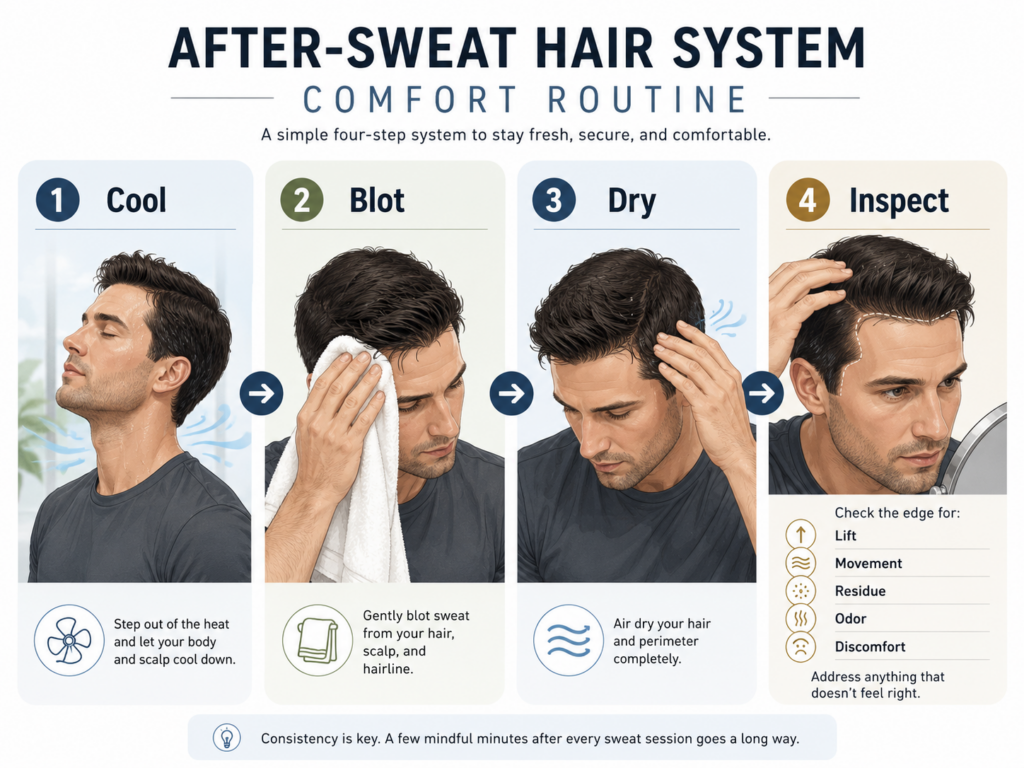
Cool, blot, dry, and inspect before pressing or adding adhesive at an edge.
Judge maintenance timing by repeated signs rather than a universal calendar.
Match attachment guidance to the base zone; one method does not fit every base.
Persistent skin discomfort is a pause signal, not something to cover with more adhesive.
What actually changes when temperature and sweat increase?
The main change is the micro-environment between the scalp, attachment, and base. Moisture can stay near the perimeter, residue may build up sooner, and headwear can hold warmth close to the scalp. No single signal proves that the entire bond is failing.
Do not use this article to choose a product or decide a complete repair. It explains comfort signals; the linked summer guide covers attachment detail.
Signal
What may be changing
Practical response
More warmth, no lifting
Scalp environment
Cool down and allow airflow
Damp perimeter
Moisture at the attachment area
Blot gently and let it dry
One small loose edge
Local attachment condition
Inspect only after the area is cool and dry
Repeated odor, widespread lift, or movement
Routine may no longer fit the conditions
Plan a full clean and reassessment
Does more sweat always mean weaker hold?
No. Preparation, base type, attachment compatibility, activity, cleanup, and skin condition all matter. One demanding day is not evidence that you need a different setup.
There is a trade-off. A stronger hold can make removal and cleanup more involved, while a lighter routine may call for closer checks. If you are not sure, start with the routine: cool down, blot, dry, then inspect. Take your time. There is no need to replace your setup after one difficult day.
What should your after-sweat routine look like?
Keep it simple and repeatable:
Let your scalp cool before making an attachment decision.
Blot moisture gently; do not rub or pull the hairline.
Wait until the perimeter is dry, then check for lift, movement, residue, odor, and discomfort.
Record repeated patterns before changing products or timing.
For a first-time summer wearer, extra checks are part of the learning curve. Keep the routine private and practical. Over time, a short note about activity, comfort, and edge condition is more useful than guessing.
When does discomfort become a stop signal?
Temporary dampness is different from persistent redness, burning, pain, blistering, broken skin, swelling, or discharge. Stop applying adhesive over compromised skin and seek qualified medical advice when symptoms are significant or persist.
Base safety matters too. Lace uses lace-compatible tape, not liquid glue on the mesh. Skin or poly uses compatible liquid glue on the scalp, not tape as the starting method. Treat hybrid bases by zone. When changing adhesive, complete the label-directed patch test on a separate wait day before full wear.
How should you adjust your routine for the rest of summer?
Use patterns, not promises. If comfort returns after cooling and drying, keep observing. Repeated lift, odor, movement, or difficult cleanup means it is time to review the routine. A stylist or experienced technician can help separate routine issues from base damage or an attachment mismatch.
For a deeper next step, read LaVivid’s summer hair system hold guide. It explains base-aware hold without product rankings or fixed duration promises.
FAQ
Can I exercise while wearing a hair system in summer?
Many wearers do. Check whether your base, attachment, and after-sweat routine remain comfortable and stable for your activity.
Should I add adhesive as soon as I notice a damp edge?
No. Cool down, blot, dry, and inspect first. Do not apply adhesive over sweat, residue, or irritated skin.
How often should I remove and reattach in summer?
There is no universal schedule. Use repeat signals such as spreading lift, movement, residue, odor, cleanup difficulty, and skin condition, together with label directions.
Is a stronger hold always more comfortable?
No. Hold strength, removal effort, cleanup, comfort, and base care are connected trade-offs. Choose a routine you can maintain safely and consistently.