You finish styling your hair, notice that something feels different, and reach up to check it. An edge seems loose, the base feels uneven, or the system no longer sits where you placed it.
Before changing products, take a moment to describe what is happening. “My hair system moves” can refer to several different problems. A lifting edge, a base that never settled comfortably, and movement across the whole unit deserve different checks.
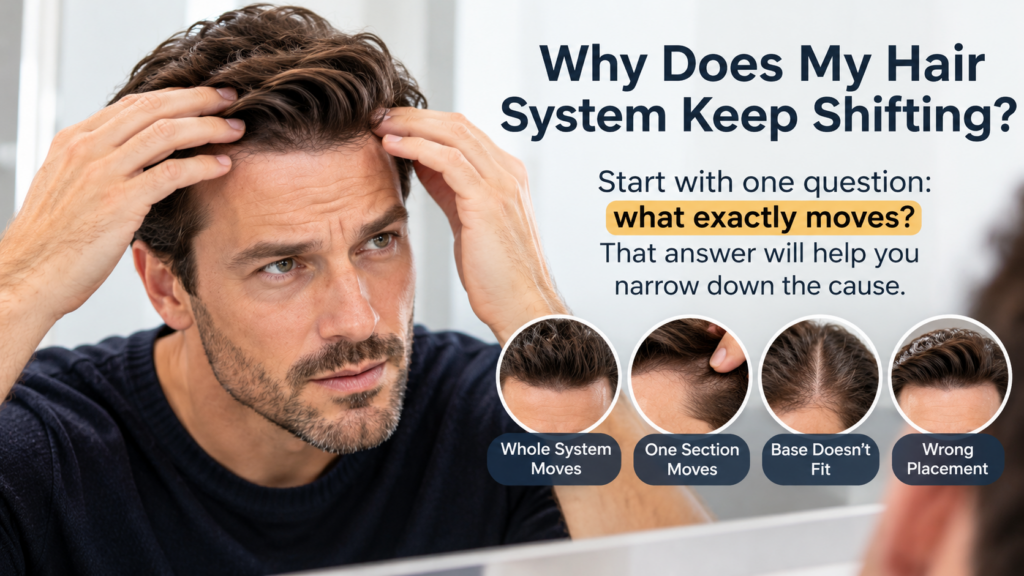
The most useful starting point is a clear observation of the movement, the fit, and the condition of the attachment.
Quick Answer
Check where the movement occurs and whether the base sits flat in its intended position. Review fit and attachment together: movement alone does not prove that the system is the wrong size. Before choosing attachment products, identify the base material. Use compatible tape on lace areas, compatible liquid glue on skin or poly areas, and a zone-specific approach for a hybrid.
Describe the Problem Before Trying Another Solution
A few observations can make troubleshooting more useful, especially if you later need help from an installer.
Ask yourself:
- Is one edge lifting, or does the whole system move?
- Does the base lie flat, or are there folds, gaps, or areas under tension?
- Is the front aligned with its intended position?
- Was the problem present during installation, or did you notice it after a period of comfortable wear?
- Is your scalp comfortable, or is there itching, redness, pain, or broken skin?
These details help explain the problem. They do not establish the cause on their own.
For example, movement across the unit is a reason to review overall fit and attachment. It is not enough evidence to order a smaller base immediately. Likewise, a loose edge deserves a local contact check before you assume the entire system needs replacing.
Look at How the Base Sits
At your next planned fitting or attachment, compare the base with your measured coverage area or existing template.
Pay attention to the perimeter. Excess material, areas that need pulling, or edges that cannot rest naturally are observations worth discussing with a fitting specialist.
Also distinguish size from contour. Size describes the area covered by the base. Contour describes how its shape follows your head. Matching the width and length does not, by itself, confirm that the base will sit smoothly.
Placement belongs in the same review. Check the front, center, sides, and back against your established fitting position. Pulling the base to reach a different hairline can make it harder to judge whether its size and shape are appropriate.
If you cannot position it consistently, get that assessed before trimming the base or purchasing a replacement.
Review What Is Happening at the Bonding Surface
Attachment depends on contact between suitable products and properly prepared surfaces. Oil, moisture, old adhesive, and remover residue can interfere with that contact.
During routine maintenance, clean the scalp and base according to the directions for the products you use. Let the attachment area dry before reapplying the system.
Avoid treating repeated cleaning as a solution in itself. The aim is a clean, comfortable surface; aggressive scrubbing over irritated skin creates another problem to address.
Product compatibility matters too:
- Lace attachment areas: Use lace-compatible tape. Do not apply liquid glue directly to the mesh.
- Skin or poly attachment areas: Use compatible liquid glue rather than treating tape as the starting option.
- Hybrid bases: Identify each attachment zone and use the method appropriate to that area. A hybrid routine is not the default starting approach for a first-time wearer.
Once you know the base material, you can review tapes, adhesives, and attachment supplies with a clearer purpose.

Before trying a new adhesive, have its matching remover available. Complete the product’s patch test as directed, with the first full application taking place in a separate session after the test is finished.
Recognize When Another Adjustment Is Not the Next Step
Stop using the product if you experience burning, pain, persistent itching, redness, or broken skin. Significant or persistent skin reactions need appropriately qualified help.
For a fit or installation problem, arrange an assessment when:
- The base repeatedly folds or leaves gaps.
- You have to stretch it to reach the intended position.
- You cannot keep the placement consistent.
- Movement continues after reviewing both fit and attachment.
Bring the system details, your measurements or template, and the names of the products used. Describe where movement occurs and when you first noticed it. That gives the person assessing the system something more specific to work with than “the adhesive is not strong enough.”
Make the Next Change for a Clear Reason
A new adhesive, a different placement, and a replacement base each address a different concern. Choose the next action from what you can observe and verify.
If the base does not sit naturally, prioritize a fitting assessment. If fit appears consistent, review preparation and product compatibility as part of the attachment check. If skin discomfort is present, pause the attachment routine and address that concern first.
For a broader look at preparation, base selection, and first-use decisions, visit LaVivid’s hair system guide for beginners.