Summer does not automatically make a hair system uncomfortable. What changes is the environment: more sweat, faster moisture and oil buildup, and a greater need for checks. If your routine feels less predictable, that is normal. Many wearers need a few warm-weather cycles to learn which signals matter.
Quick Answer
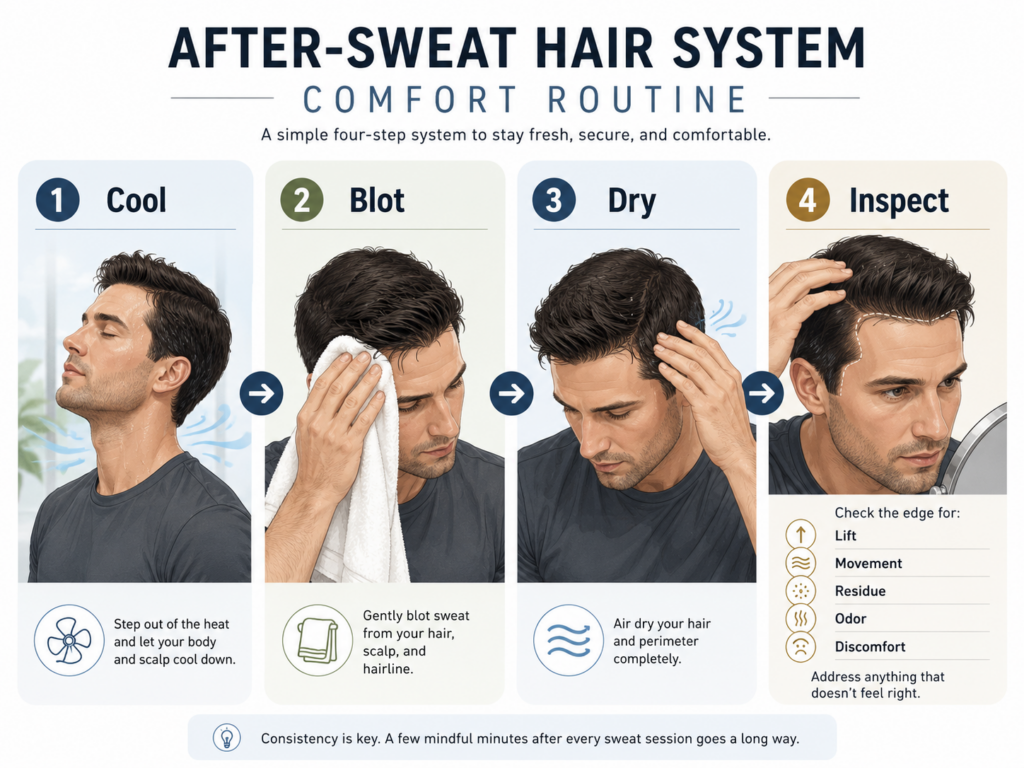
Heat and sweat mainly change the scalp environment and the maintenance rhythm, not whether a hair system can be worn at all. More moisture means you may need to cool down, blot sweat, let the attachment area dry, and inspect the perimeter more often. Base and attachment compatibility still matter: lace zones start with lace-compatible tape, skin or poly zones with compatible liquid glue on the scalp, and hybrid bases are handled zone by zone. Do not chase a fixed hold-time promise. Judge comfort by repeat patterns, edge stability, residue, odor, and skin condition.
Quick Takeaways
- Sweat is a routine signal, not automatic proof that the attachment has failed.
- Cool, blot, dry, and inspect before pressing or adding adhesive at an edge.
- Judge maintenance timing by repeated signs rather than a universal calendar.
- Match attachment guidance to the base zone; one method does not fit every base.
- Persistent skin discomfort is a pause signal, not something to cover with more adhesive.
What actually changes when temperature and sweat increase?
The main change is the micro-environment between the scalp, attachment, and base. Moisture can stay near the perimeter, residue may build up sooner, and headwear can hold warmth close to the scalp. No single signal proves that the entire bond is failing.
Do not use this article to choose a product or decide a complete repair. It explains comfort signals; the linked summer guide covers attachment detail.
| Signal | What may be changing | Practical response |
|---|---|---|
| More warmth, no lifting | Scalp environment | Cool down and allow airflow |
| Damp perimeter | Moisture at the attachment area | Blot gently and let it dry |
| One small loose edge | Local attachment condition | Inspect only after the area is cool and dry |
| Repeated odor, widespread lift, or movement | Routine may no longer fit the conditions | Plan a full clean and reassessment |
Does more sweat always mean weaker hold?
No. Preparation, base type, attachment compatibility, activity, cleanup, and skin condition all matter. One demanding day is not evidence that you need a different setup.
There is a trade-off. A stronger hold can make removal and cleanup more involved, while a lighter routine may call for closer checks. If you are not sure, start with the routine: cool down, blot, dry, then inspect. Take your time. There is no need to replace your setup after one difficult day.
What should your after-sweat routine look like?
Keep it simple and repeatable:
- Let your scalp cool before making an attachment decision.
- Blot moisture gently; do not rub or pull the hairline.
- Wait until the perimeter is dry, then check for lift, movement, residue, odor, and discomfort.
- Record repeated patterns before changing products or timing.
For a first-time summer wearer, extra checks are part of the learning curve. Keep the routine private and practical. Over time, a short note about activity, comfort, and edge condition is more useful than guessing.
When does discomfort become a stop signal?
Temporary dampness is different from persistent redness, burning, pain, blistering, broken skin, swelling, or discharge. Stop applying adhesive over compromised skin and seek qualified medical advice when symptoms are significant or persist.
Base safety matters too. Lace uses lace-compatible tape, not liquid glue on the mesh. Skin or poly uses compatible liquid glue on the scalp, not tape as the starting method. Treat hybrid bases by zone. When changing adhesive, complete the label-directed patch test on a separate wait day before full wear.
How should you adjust your routine for the rest of summer?
Use patterns, not promises. If comfort returns after cooling and drying, keep observing. Repeated lift, odor, movement, or difficult cleanup means it is time to review the routine. A stylist or experienced technician can help separate routine issues from base damage or an attachment mismatch.
For a deeper next step, read LaVivid’s summer hair system hold guide. It explains base-aware hold without product rankings or fixed duration promises.
FAQ
Can I exercise while wearing a hair system in summer?
Many wearers do. Check whether your base, attachment, and after-sweat routine remain comfortable and stable for your activity.
Should I add adhesive as soon as I notice a damp edge?
No. Cool down, blot, dry, and inspect first. Do not apply adhesive over sweat, residue, or irritated skin.
How often should I remove and reattach in summer?
There is no universal schedule. Use repeat signals such as spreading lift, movement, residue, odor, cleanup difficulty, and skin condition, together with label directions.
Is a stronger hold always more comfortable?
No. Hold strength, removal effort, cleanup, comfort, and base care are connected trade-offs. Choose a routine you can maintain safely and consistently.